
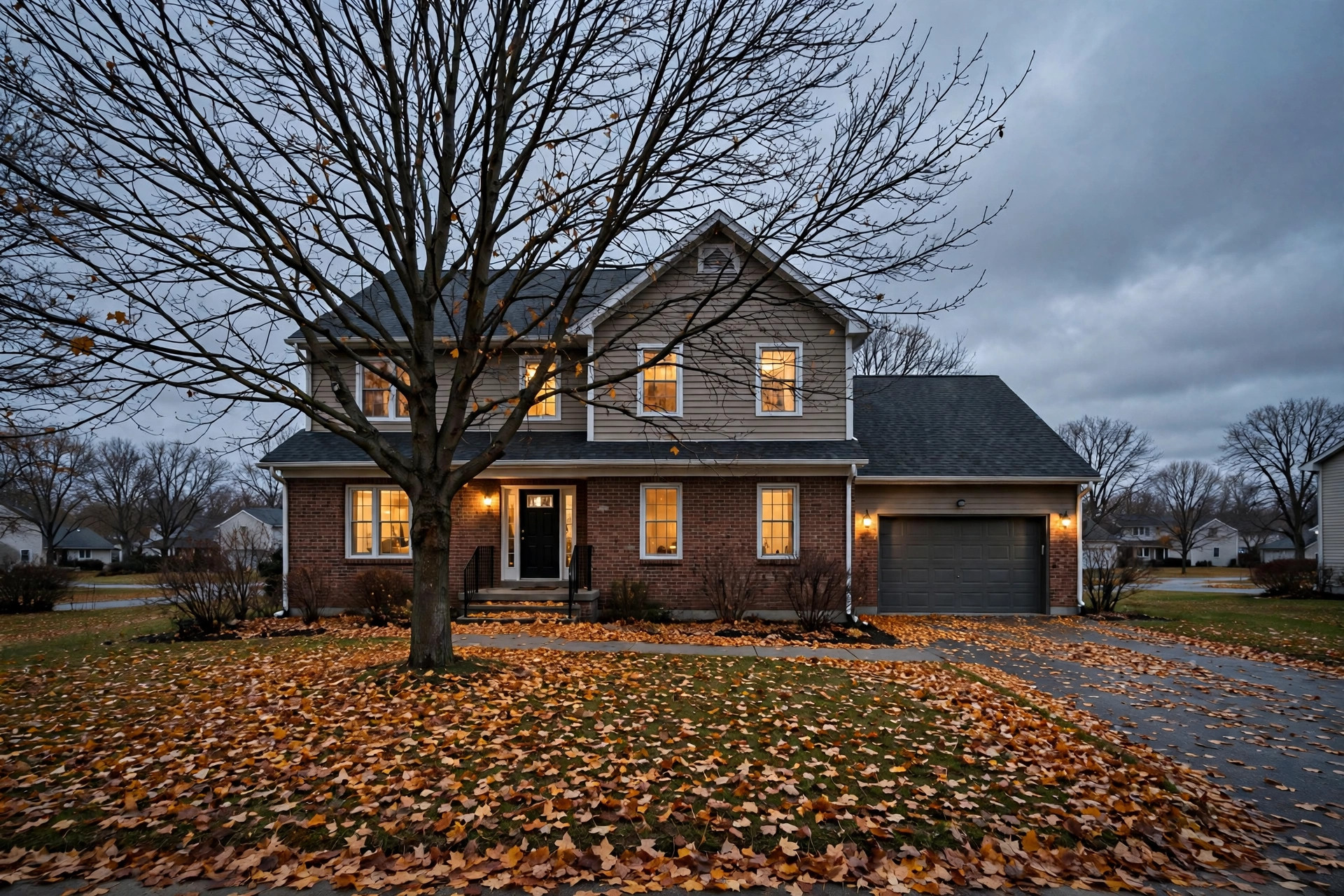
If you are thinking about selling a home in Southeast Michigan this late fall, the most important number is not the national median price. It is this one: in September, 20.8 percent of active listings across the country took a price reduction — the highest September share since 2018, according to Realtor.com. More than one in five sellers started too high and had to adjust.
That does not mean values are falling here. It means buyers have more choice, they are taking longer to decide, and they are rewarding homes that are priced honestly from day one. Sellers who understand that shift are still selling well. Sellers who price for last spring are the ones cutting in week three.
Here is what the latest data says, and how to use it if you are listing in Ann Arbor, Canton, Plymouth, Ypsilanti, Novi, Westland, Livonia, or anywhere in Southeast Michigan in the next few weeks.
What the fall numbers actually show
Nationally, existing-home sales rose 1.5 percent in September to a seasonally adjusted annual rate of 3.99 million, but were still down 2.2 percent from a year earlier, according to the National Association of REALTORS. The median existing-home price was $417,500, up 1.3 percent from a year ago — the 39th straight month of year-over-year gains. Inventory rose to 1.60 million homes, up 4.6 percent from a year earlier, for a 4.8-month supply. Homes took a median of 33 days to sell.
The Midwest held steadier than most regions. Sales were unchanged in September at a 930,000 annual rate, and the Midwest median price was $329,600, up 3.1 percent from a year earlier — the strongest regional price gain outside the Northeast. In other words, our region is not weak. It is balanced, and balanced markets punish overpricing more than hot markets do.
Locally, the same pattern shows up city by city. In Canton, Realtor.com puts the median listing price at $376,300 in October, with 369 active listings and a median of 35 days on market. Statewide in Michigan, the median listing price is $300,000, homes sit a median of 47 days, and homes sold for about 99 percent of asking on average — a textbook balanced market.
Rates are the other half of the story. The average 30-year fixed mortgage was 7.32 percent in the week ending October 22, down from 7.40 percent the week before, while the 15-year fixed averaged 6.68 percent, according to Freddie Mac. That small dip helps at the margin, but at these levels buyers are payment-focused. A home priced $15,000 too high does not just look expensive — it pushes the monthly payment past the line many buyers set with their lender.
Price to the first two weeks, not to a future cut
In a balanced market, the first two weeks are your market. Fresh listings get the most online views, the most showings, and the buyers who have been waiting for the right home in your neighborhood. Once a listing passes 30 days, buyers start asking what is wrong with it — even when the only problem was the starting price.
Practical pricing for late fall looks like this:
- Price from the most recent closed sales, not from active listings. Active listings are your competition, including the overpriced ones that have not sold. Closed sales from the last 60 to 90 days in your subdivision or within a mile are what an appraiser will use, and what serious buyers are already seeing.
- Leave negotiation room in terms, not in an inflated price. Buyers in this market often value a rate buydown credit, a flexible closing date, or help with closing costs more than a small price cut. Price close to value and keep room to offer a concession that solves a payment problem.
- Watch the first ten days honestly. If you have had few showings and no second looks, the market is giving you information. A timely, single adjustment early does more than two small cuts spread over a month, which can make a listing look like it is chasing the market down.
NAR Chief Economist Lawrence Yun put it plainly in the September report: higher inventory and longer days on market give buyers more negotiating power, and sellers need to be realistic about local conditions, which may require price adjustments and incentives. Starting realistic is better than adjusting late.
Preparation that pays when buyers can compare
When buyers had no choice, preparation was optional. Now they can compare your home with a dozen others on their phone in one evening. In late fall in Michigan, a few things matter more than they do in summer:
- Light and warmth. Shorter days mean many showings happen at dusk. Warm bulbs, every light on, and a comfortable temperature make a home feel cared for. Clear photos taken in good light matter even more, because most buyers will meet your home online after dark.
- Seasonal basics done before listing. Clean gutters, leaves off the lawn and walkway, furnace serviced, and any obvious draft or leak addressed. Buyers and inspectors notice deferred fall maintenance, and in a market with choice they price it into their offer.
- The entry and the kitchen carry the tour. You do not need a renovation. Decluttered counters, a deep clean, and minor fixes — a loose handle, a dripping faucet, a scuffed wall — signal that the bigger systems have likely been looked after too.
How to read offers in a balanced market
Do not judge an offer by price alone. With rates above 7 percent, the strongest offer is the one most likely to close at the agreed number. Look at pre-approval strength, down payment, appraisal gap language, inspection terms, and the buyer’s flexibility on timing. A slightly lower offer with a solid pre-approval and clean terms can be worth more than a higher offer that depends on an appraisal your pricing does not support.
Expect negotiation. With Michigan homes selling at about 99 percent of asking on average, a fair back-and-forth is normal — it is not a sign your home was mispriced. What you want to avoid is silence: no showings, no feedback, no offers. That is a pricing or presentation signal, and it is fixable early.
The bottom line for Southeast Michigan sellers
Late fall is not a bad time to sell in Southeast Michigan. Serious buyers are still active — many want to be settled before winter deepens or the new year — and you face less competition than in spring, when every similar home lists at once. The sellers who do well now are not the ones who ask the most. They are the ones who price from recent sales, present the home well for the season, and respond quickly when the first two weeks speak.
If you are weighing a sale this fall or winter, start with an honest read on what your home would sell for in today’s numbers — not last year’s, and not a neighbor’s asking price. IKL Real Estate is based in Ann Arbor and serves buyers and sellers across Southeast Michigan. Call or text us at 734-926-9444, and we will walk through your home’s value and the right pricing strategy for your street, with no obligation.
Sources: National Association of REALTORS, Existing-Home Sales, September 2026 — https://www.nar.realtor/newsroom/existing-home-sales-increased-1-5-in-september-according-to-nar-report ; Realtor.com September 2026 Monthly Housing Trends Report, reported by RISMedia — https://www.rismedia.com/2026/10/07/price-cuts-reach-september-record-inventory-nears-pre-pandemic-levels/ ; Freddie Mac Primary Mortgage Market Survey, week ending October 22, 2026 — https://www.morningstar.com/news/globe-newswire/9851396/mortgage-rates-decrease-to-732 ; Realtor.com Canton, MI market data, October 2026 — https://www.realtor.com/local/market/michigan/wayne-county/canton ; Realtor.com Michigan market data, October 2026 — https://www.realtor.com/local/market/michigan
0 Comments